
URAI Symposium

Das jährliche KI-Event!

URAI-Symposium – Künstliche Intelligenz am Oberrhein

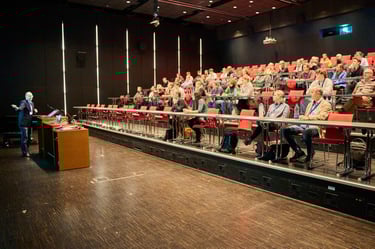
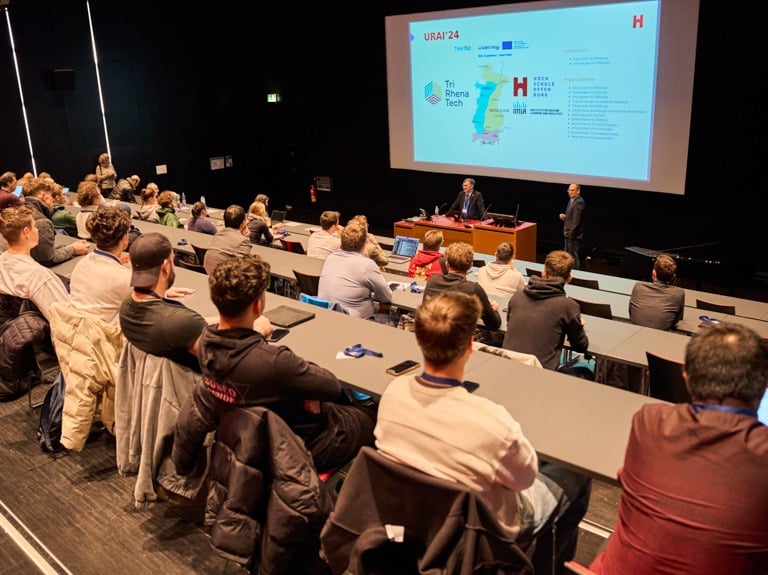
Jedes Jahr veranstaltet TriRhenaTech das URAI-Symposium (Upper-Rhine Artificial Intelligence Symposium), eine trinational wissenschaftliche Veranstaltung, die sich der Künstlichen Intelligenz widmet. Es findet jeweils in einem anderen Land statt und unterstreicht so den grenzüberschreitenden Charakter der Allianz.

Aktuelle Ausgaben:

- 2019, in Offenburg (Deutschland): From Research to Application
- 2020, in Karlsruhe (Deutschland): Artificial Intelligence: Research Impact on Key Industries
- 2021, in Kaiserslautern (Deutschland): rund um die Anwendung von KI in den Life Sciences, Industrie 4.0 und Mobilität
- 2022, in Furtwangen (Deutschland): AI in Medicine, Manufacturing and beyond
- 2023, in Mulhouse (Frankreich) an der ENSISA: KI für Zeitreihen, Robotik und darüber hinaus
- 2024, in Offenburg (Deutschland): Applied AI in the age of Generative AI
- 2025, à Strasbourg (France) : AI in Medicine & Healthcare : from algorithm to clinical application

Dieses wandernde Modell ermöglicht es TriRhenaTech, jedes Jahr ein innovatives Thema der Künstlichen Intelligenz zu fördern und gleichzeitig die Synergien zwischen den Institutionen, Forschern und Expert:innen der drei Länder zu stärken.
Nächster Termin

Mittwoch 4. November in Windisch

2026

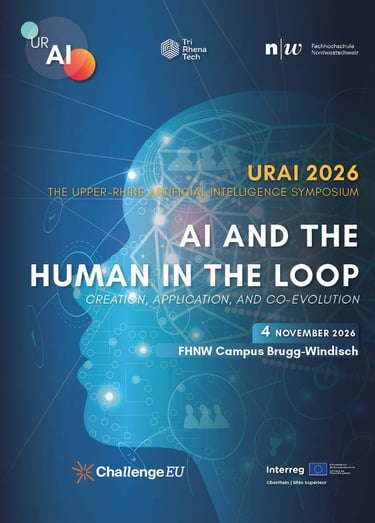
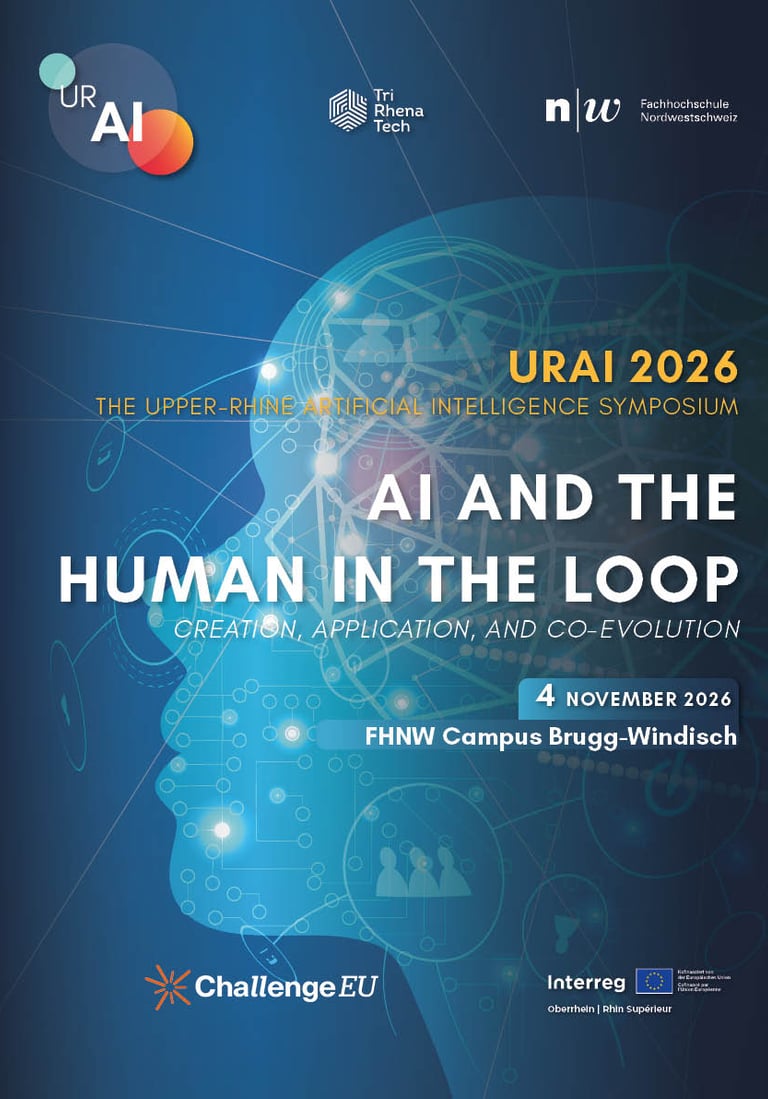
URAI 2026

Upper Rhine AI Symposium 2026 – Windisch

AI and the Human in the Loop:
Creation, Application, and Co-Evolution


KALENDER :
Extended Abstract Submission: 12 June 2026
Notification of Acceptance: 03 July 2026
Full Paper Submission: 30 September 2026
URAI Symposium: 04 November 2026

WO? : University of Applied Sciences and Arts Northwestern Switzerland FHNW
FHNW Campus Brugg-Windisch
Switzerland

URAI 2026 : call for papers
AI and the Human in the Loop:
Creation, Application, and Co-Evolution

Deadline : 12.06.2026

Möchten Sie mit dem Organisationsteam in Kontakt treten? Kontaktieren Si : hello@trirhenatech.org

PRESENTATION

Artificial intelligence is rapidly moving from research laboratories into real-world environments. The successful deployment of AI systems requires close interaction between algorithmic development, domain expertise, and human decision-making. URAI 2026 explores how AI technologies are created, applied, and co-evolved through human-AI collaboration — across disciplines and application domains.

The TriRhenaTech network of universities plays a crucial role in shaping AI’s responsible future. We particularly welcome submissions that align with the key research strengths of the Universities of Applied Sciences and Arts in the Upper Rhine region, members of TriRhenaTech.

Topics of Interest

We invite theoretical, technical, and applied research contributions addressing (but not limited to) the following areas:

1. AI System Development
· Machine learning models, deep learning, and neural network architectures
· Software engineering for AI: frameworks, tools, and best practices
· MLOps and AI lifecycle management
· AI-assisted software development: automated code generation, debugging, and testing
· AI-driven software engineering processes: requirements engineering, system design, and continuous integration

2. Human-AI Interaction
· Human-in-the-loop systems and decision support
· Hybrid intelligence: integrating human intuition with machine learning
· AI as a creative and collaborative assistant in design, engineering, and the arts
· AI and the Future of Work: human-AI collaboration, new organizational models, skill transformation, and AI-supported work environments

3. AI in Application Domains
· Healthcare & Life Sciences: AI in biotechnology, diagnostics, and patient care, digital health, and preventive healthcare systems
· Industry & Smart Manufacturing: AI in Industry 4.0, automation, and additive manufacturing
· Sustainability & Energy: AI for climate-neutral solutions, decarbonization, smart grids, energy-efficient systems and sustainable infrastructure

4. Responsible and Trustworthy AI
· Transparent, explainable, and trustworthy AI
· AI ethics, bias mitigation, and regulatory compliance
· Cybersecurity and safety in AI-driven environments

Contributions linking AI research with societal transformation in the areas of work, sustainability, and health are particularly encouraged.

Crédits Photo : Hoschschule Offenburg